
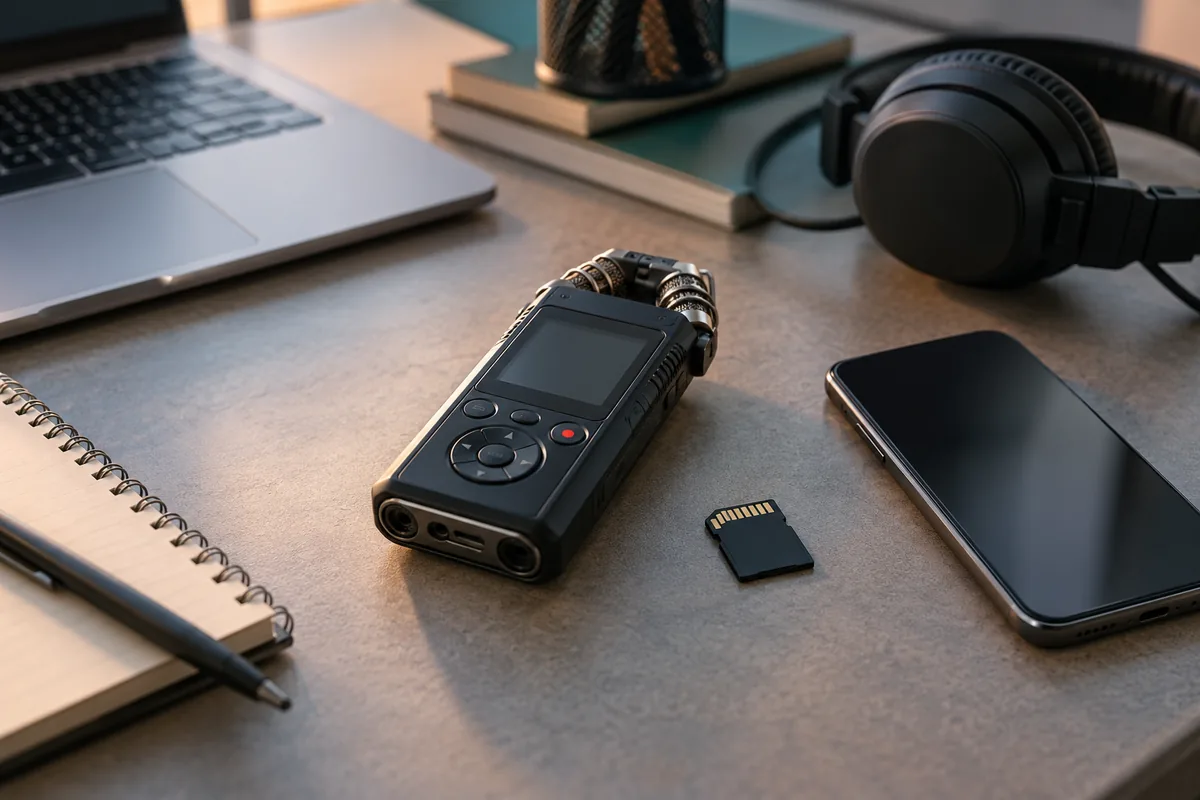
A recording received through a messaging app may already be a transformed version of the source file. For examination, it is important to preserve the available source and transmission history, rather than merely forwarding a selected segment. Checking speech content and examining technical alterations require different source data.
Do not delete a long recording for the sake of a short segment
Timestamps may be specified for orientation, but the complete available file is preserved separately. The beginning, end and adjacent sections may matter for analysis of continuity and recording conditions. An extracted segment does not automatically permit a conclusion about the entire source recording.
What to include in the inventory
- The source file from the device, if lawfully available.
- The version received through the messaging app, with a description of its transmission.
- Information about the device and application, where known.
- The history of conversion, editing and audio enhancement.
- A transcript as a separate supporting document.
Missing data do not amount to proven editing
Metadata and parameters may change during routine forwarding. This limits the examination but does not in itself confirm interference with the content. Similarly, failure to detect signs of alteration in a copy does not prove that any earlier source file is unchanged.
Do not enhance the only copy
Noise reduction, normalisation, changes in speed and neural network restoration may alter the available features. An enhanced working version must be stored separately and the operations described. Words unintelligible in the source material must not be inserted into a transcript as reliably heard without indicating uncertainty.
How to pose questions
Checking technical integrity, analysing spoken speech, identifying a person by voice and examining an image of a person are separate tasks. Before work begins, the required field, comparison materials and permissible limits of the answer are clarified.
Specify the particular disputed segment and what needs to be established. If only a forwarded copy is available, disclose this in advance. The examination may be useful within the available scope, but its result must not be extended to originals that were not submitted or automatically confirm every circumstance of the conversation.
Preserving the inventory and source files helps the analysis to be checked again using the same objects. This is particularly important when different parties to a dispute submit similar recordings with different durations and parameters.